Posts Tagged ‘Vietnam’

Those frustrating Taxis

Written on July 6th, 2010 by Oweeno shouts

A reliable company

Is there something special about Tom and Jerry that I do not know about? There seems to be an addiction to the cartoon here. As far as I know, they have not been made for years, but every day they are shown here. What is really confusing to me is that the Vietnamese people seem to be mesmerized by them. Not just the kids, but the adults as well. Right now I am watching my night man watching Tom and Gerry. I think if the phone rang he would not hear it. I experienced a similar thing in a bar and restaurant that a friend owns. He had installed a retractable roof so his newly purchased furniture would be protected during rain storms. A storm did hit and everybody was so involved in watching Tom and Gerry that the roof never was adjusted and for the rest of the day, no customers could seat themselves without getting wet.

I still intend do a story on bicycles soon, but for now let me tell you a little about Taxi’s in Vietnam and the problems that many

Take your chances with this one

 tourists can face with them. I will also address how to deal with them and save you a lot of hassle. The nature of the taxi business is such that it is that they are always struggling to get the customer before another. Once the customer is in the car, they try to be “helpful” in order to get tips, commissions, and any other add on they can profit from. In Vietnam, the same is true but it seems that they have taken this basic service to a whole different level. Taxis and the scams they may try to abuse you with can be a black mark on your vacation.

Firstly, to my amazement, it seems that most taxi drivers are from the north. I recognize the accent and have always wondered why that would be. Perhaps one day I will figure that out. Anyway, in travel forums and guides, you will read

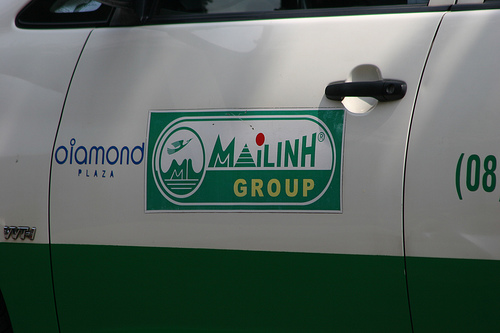
Made to look like A MaiLinh... avoid these

about the constant problem of people being abused, and ripped off by Taxi drivers. This is one rare occasion where I have to agree with books such as the lonely planet guides. Taxis in Vietnam can be a nightmare. Once you have placed luggage in their trunk, you are at their mercy if something goes wrong. The last thing that you want is some hot headed individual to drive off with all of your possessions.

There are a number of legitimate cab companies that are usually a safe option for the tourist. The best are Vinasun and MaiLinh. Under normal circumstances they will be honest and will run by the meter. You can be reasonably assured that it is a legit cab if he or she is wearing a uniform with a tie. It is still a best practice to get the Taxi number whenever entering a taxi in Vietnam. If anything goes wrong, you can report it. If you are picked up

Another good company

 my on of the two companies mentioned and the driver is not wearing the white shirt and tie, there is a chance that it is a clone with a doctored meter. Try to be sure that the driver looks like he belongs. You will see other taxis that will confuse you painted in the same color scheme and worded slightly different such as ma-linh or Sunvina… avoid these. It is a hit and miss weather the meter has been altered. I tried an experiment in Saigon with two cabs. I hired a Vinasun taxi to take me to a restaurant. The fare was 28000 dong. When I left, I returned t the same location but took a Sunvina. The meter was altered and the fare came to 68000 dong. Some of the best practices in Vietnam when hiring a taxi are:

Use a reputable company and note the taxi number, then ask to use the meter. If you are negotiating a fare, be sure it is for the whole group. Sometimes they will say it was per person and the fight will begin. If you can, carry your luggage in the back seat and not in the trunk, that way at anytime if you believe you are being taken for a ride, you can insist to stop here and get out. All is not doom and gloom, but you should be

My style of Taxi

aware of the taxis trying to make a quick buck.  In my experience, going by the meter with a reputable company is the best, and you can always keep them honest by pretending to refer to a map in your lap. Now here is the part where most tourists are scammed.

Most drivers have deals with hotels and attractions and will get a commission if they deliver a customer to them. On three separate occasions (that I know of) I have had hotel guests that were scooped by drivers trying to gain a few extra dongs. Some of my customers have been told that I was out of business, way to far from the city, not clean, in a bad neighborhood, and other excuses. Hah!!! Do not be gullible…. I myself have tired of the taxi driver. When in Saigon, I just take a bus. It is just as fast. In NhaTrang airport, I just ignore all the taxis, walk into the parking lot and hire a car that is willing to be honest. Airport taxis are notorious for being swindlers.  I still use taxis on a regular basis as long as the meter is running and I am not getting any of their rasons to go to another hotel,  but when I do, I throw the fear of Buddha into them by having them stop the car and telling them that they are being dishonest in my poor Vietnamese.

Full Story » Filed under Main Tags:,

Weather in Vietnam… a Hot topic

Written on May 3rd, 2010 by Oweeno shouts


Ok….. Here it is….. Everything you wanted to know about the weather in Vietnam. I usually start my writings from South to north, so let me be a rebel and start in the north.

SAPA

The climate of Sapa is highly seasonal, with a subtropical climate in the summer and a temperate climate during the winter. Average temperature for Sapa town is 15.4ºC, with a maximum of 29.4ºC and a minimum of 1ºC. Sapa also experiences a marked wet season from May to September, with the heaviest rainfall occurring in July and August. The weather is also notorious for changing frequently and quickly. It is said that only in Sapa, one can experience many different seasons within only one day.

February- Very cold in early days, cloudy, foggy. Getting warmer & better towards later days. 

March- Much nicer and warmer than Feb, more sunshine

April- Summer start, dry, clear, warm enough

May- Starting rainy season with quick shower occasionally, clear sky with more sunshine but little bit warm in the open at noon. 

June- Warm but not as hot like other region. Clear sky, much sunshine but summer shower get more but not too wet

July- Among the 2 worst months of the year caused by summer shower

Augus-t The peak month of typhoon and rain 

Septembe-r Autumn starts, getting drier and normally very nice towards the end of the month. 

October- Cool, dry, sunshine almost everyday, clear sky

November- Cooler, dry. May be misty and foggy towards the end but nice.

December-Wet winter starts and gets worse in the later days of the month. It can get qite chilly.

Halong Bay

Halong’s climate is humid and tropical. With a hot, humid summer and dry, cold winter; Halong’s  temperature varies from 15ºC to 25ºC.Annual rainfall is between 2000mm and 2200mm. Ha Long  bay has typical diurnal tide system (tide amplitude ranges from 3.5-4m). The salinity is from 31 to 34.5MT in dry season and lower in rainy season. It is possible to visit Ha Long Bay year-round, with the best time to visit from October through April, although during the winter months of December, January and February, the weather can be cool and overcast with low visibility.  During the summer months from May to September, temperatures rise and storms are more likely during the rainy season. 

Hanoi,

Hanoi has typical North Vietnam climate, with a cold and dry winter (when temperatures can drop to as low as 6°C – 7°C) and a hot and extremely humid summer (temperatures can climb up to a maximum of 35°C). Spring is characterized with light drizzles while the summers bring heavy rain. The best time to visit Hanoi is around September to November or from March to April for their milder temperatures and pleasant weather. 

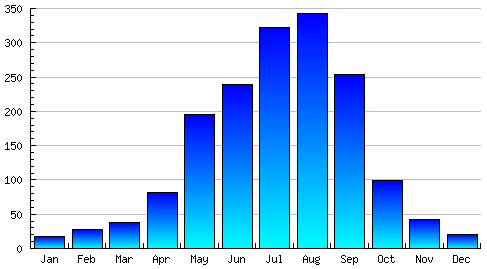
Average Rainfall millimeters

Average Temperature

Hue/ Danang

The coast and delta area of Hue has tropical climate and is divided into two distinguished seasons. The dry season (from March to August) has a maximum temperature of 400 C and the colder, rainy season (August to January) has temperatures that can go down to 19,70 C. In higher areas (on mountains, highlands) the temperature is generally cooler. From March to August will be the best time to visit Hue, especially between March and April when the temperature is more pleasant, though rainfalls are still likely. Hue sees fog and rain quite frequently, even when the weather across the Hai Van Pass in nearby Danang is sunny.  During the rainy season, between September and January, rain is more frequent and can be heavy.

Weather chart for Hue/Danang/Hoi An area

Average Rainfall centimeters.

Average Temperature

Hoi An

Somewhere between tropical and climate. The temperature is warm throughout the year (average 29°C), yet hotter around months June and July and cooler around December. Hoi An is affected by monsoon winds. The city will be constantly raining from September till January, and dry for the rest of the year. Overall, the best time to visit Hoi An is between May and June. February and April are among the best time to visit Hoi an when rainfall is low and temperatures are pleasant. The temperatures can get hot during summer time and during the rainy season, particularly during October and November, rains can be frequent and heavy.

NhaTrang

Nha Trang is extremely lucky to not be influenced by monsoon winds that turn the rest of southern Vietnam into water six months every year. Nha Trang has a warm, fair and beautiful climate nearly all year round, with the exception of late October, November and early December. The best time to visit Nha Trang would probably be March or April. The least windy months of the year are May, April and June. Nha Trang in general is not windy enough to windsurf, with the exception of Doc Let beach (35 km north of Nha Trang), which is usually reserved for experts.

NhaTrang rainfall

NhaTrang Temperatures

Dalat

Surrounded by mountains and pine forests, Da Lat has many characteristics of a temperate climate. The average temperature here is 18–21°C, with highest temperature 30°C and lowest 5°C. Dalat also has the two season climate typical of South Vietnam, with a monsoon season from May to October and a dry season from November to April. Dalat is never stormy and only has occasional heavy winds from the ocean through the mountainless East side of the city. Dalat is in the temperate region and has pleasant weather year-round, even sunny during much of the rainy season.  The dry season lasting from November to March, and the rainy season from April to November. During the winter months, the average temperature is 10 C while during summer it is around 20 C.  Ideal weather is from November to March, when the air is fresh and cool.

Mui Ne

Mui Ne lies in the monsoon tropical zone, with 2 district seasons. The rainy season is from May to October and the dry season from November to April. Dry season normally means NO RAIN. Mui Ne lies in the emerging Binh Thuan Desert and is prone to drought. Onset of rainy season can bring flash flooding and extensive errosion. Rainy season brings lush green foliage and the return of birds, butterflies and other wildlife (and takes away the tourists). Rain is usually for an hour, once or twice a day (typically afternoon and evening), during the rainy season. The yearly average rainfall varies between 50 and 100 cm. The average relative humidity is 79%. Because Mui Ne receives very little rain, it is also sunnier, and thus feels hotter than Nha Trang or Ho Chi Minh City.

Ho Chi Minh City weather and climate

Located in South Vietnam, Ho Chi Minh City city has a tropical climate. The average humidity level is 75%, average temperature is 28 °C. The city is generally warm, and has a monsoon season from May to November and a dry season from December to April. During the rainy season starting from May to November, rains can be long and heavy, but often are short daily rains that clear quickly. Generally, the best time to visit is during the dry season from December and April, although the coolest months are October through December.

Average rainfall in Saigon

Average temperature in Saigon

Phu Quoc

The island’s monsoonal sub-equatorial climate is characterized by distinct rainy (June to October) and dry seasons (November to May). The annual rainfall is high averaging 2,879 mm. In the northern mountains up to 4,000 mm have been recorded. April and May are the hottest months with temperature reaching 35 °C. Trips to Phu Quoc can be made all year round, but the best time is dry season when the sky is always sunny, clear and blue.

So there you have it!! I wish to thank all of the sites I copied from. It was a bit hard compiling this information into one place, and your sites helped immensly.

Why visit Vietnam Part 1

Written on April 5th, 2010 by Oweeno shouts

Mekong attraction

In the mid 2000’s Vietnam seemed to discover the tourist dollar. The government let it be known to the people that tourism and the foreigners that were to come with it, will be welcomed and anybody causing us difficulties would be dealt with. It is now 2010 and Tourism has flourished. Most cities have developed areas that foreigners stay and around them has developed a tour industry that may surpass anything similar in other countries. There is heave competition for the tourist dollar and a person can get extremely good deals on travel and accommodation to many places. With the increase of tourist traffic, the ever industrious Vietnamese have introduced services that can be quite unique and exactly what a budget traveler is looking for.

First let us address tours:

Many people are overwhelmed by the amount of information that comes

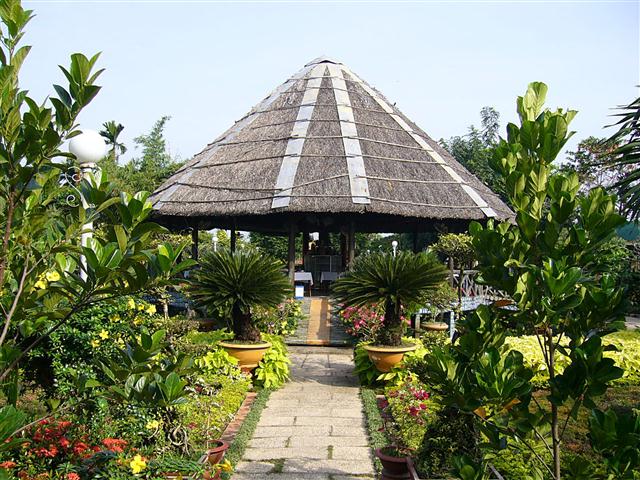
In Binh Quoi resort

 their way when searching for a company. Many of them are good and will do anything to satisfy the customer. There are some that are not, but a little homework will ensure you make the correct choice. All reputable tour companies use guides licensed by the government. They will display their licenses around their necks at all times when escorting guests. They are charged to keep you safe and visit establishments that have acceptable standards for a foreigner. The last thing you want is to end up with a bad case of diarrhea and have to suffer in places where the toilet is a hole dug in the ground. The meals will be safe to eat, toilets will be relatively clean. Travel forums such as Trip Advisor can help to make a correct decision, but a person has to try to weed out the people or company promoting themselves for a profit or commission. Also…. Do not be put out by the package you

Stadium in Mekong

might see advertised on a website or other media. A good travel company will take the areas of interest you wish to see and custom built it to your taste. You are the boss.. You choose where you want to go, and if the tour they have pre-built is OK by you, go for it.

Things to ask a company before deciding are

Do you use all accredited guides?

Do they speak the language you want?

Are the busses or cars in new condition?

Garden decoration

How long has your company been in business?

A little time and reading will get you a good guide…… or…. You can always ask me for a referral. I have personal friends in the business that specialize in English speaking tours.

Now, why travel to Vietnam?:

Vietnam is a country and culture very different than others. Through much of its history, Vietnam was an occupied country endlessly struggling for its freedom from foreign rule. This constant struggle has created an extremely rugged and tough people who are able to live in extreme hardship without complaint or thought about it. They work hard at everything, and

Mekong bridge

consequently also play hard when it is all over. They are a happy gracious people with a hard edge that sometimes makes foreigners nervous, but under that edge is a person who would like dearly to be your friend, and invite you into his/her home. It is something to behold, the differences in life here. At first it may come as a big culture shock. Someone described the experience t me as “Vietnam is like a big unassembled jig-saw puzzle after all of the loose pieces were poured onto the floor. It makes no sense, but as you slowly put piece by piece together, it slowly starts to make sense.” A very apt description I think. Soooo the people are great but what about value?…. I am here to tell you that Vietnam is one of the least expensive travel destinations in the world. They still have not quite figured out the rules of supply and demand, but rather compete with each other driving prices down. There also were or are a lot of regulations to where and what kind of hotels could be built. When the Vietnamese saw the tourists come, many in order to get a piece of the pie renovated their homes into guest houses and mini hotels, and they are everywhere. A person can rent a guest house in an out of the way area for as little as 4 dollars a night. On average, a budget

Hotel in Mekong

 conscious traveler can get nice accommodation right in the heart of all the action for 10 to 20 dollars a night anywhere in the country.

The average person here makes about 60 to 100 dollars a month, so all prices are relative to that. You can spend more money staying in foreign hotels eating foreign meals, but why come to Vietnam for that? I meal in Vietnam might cost a dollar or so, and the cold beer with is 30 cents. The taxi to drive across town maybe 3 dollars. Quality clothing of any kind can be purchased for 4 of 5 dollars. Jeans, shorts, shirts…. Take your pick.

So we have established that the people are friendly and it is not an expensive place to find food and accommodation, but what about moving around?

First there is the tour company you may have chosen. They will arrange all of your transportation for you, but if you wish to go on your own?

a small house

The main modes to transportation are Air, Train, Bus, Sleeper bus, Express Taxi Bus. aqnd Open tour bus.

Travel by air is not expensive in Vietnam and a flight between cities will range from 40 to 80 dollars on an average. They are easy to book online and if no holidays are involved, a person can usually get flights in the same week. It is the fastest mode of travel. Next fastest is the express Taxi bus. It is run by a number of different companies. They have assigned seating and travel from point a to b with minimum stops. Usually these are 15 seat passenger transports. Then there is the train. The comfortable trains run at night and a solid sleeper can rent a berth and try to sleep the distance travelled. There are also recliner chairs for the more budge oriented person that does not mind roughing it a bit.

The sleeper bus is a good way to travel. Very inexpensive and the beds are not too uncomfortable. If you can sleep anywhere, this is the way to go.

Real men love props

Lastly are the open tour and the regular bus. The open tour is a concept where you can purchase a ticket to a destination and have 30 days to use it. The ticket allows a person to get off anywhere along the route, spend a day or two, and continue on another day. It stops frequently for breaks and nap time, so be prepared for a long day. The regular bus can be fun but very tiring. It is a constant busy overcrowded mode of transport, and almost anything is allowed on board as long as the people can profit from it. I have literally rode with chickens.

Enough for now…… more to follow…

Older Posts »