
Ok here it is, everything you wanted to know about the weather in Vietnam. I usually start my writings from South to north, so let me be a rebel and start in the north.
SAPA
The climate of Sapa is highly seasonal, with a subtropical climate in the summer and a temperate climate during the winter. Average temperature for Sapa town is 15.4ºC, with a maximum of 29.4ºC and a minimum of 1ºC. Sapa also experiences a marked wet season from May to September, with the heaviest rainfall occurring in July and August. The weather is also notorious for changing frequently and quickly. It is said that only in Sapa, one can experience many different seasons within only one day.
February- Very cold in early days, cloudy, foggy. Getting warmer & better towards later days.
March- Much nicer and warmer weather than Feb, more sunshine
April- Summer start, dry, clear, warm enough
May- Starting rainy season with quick shower occasionally, clear sky with more sunshine but little bit warm in the open at noon.
June- Warm but not as hot like other region. Clear sky, much sunshine but summer shower get more but not too wet
July- Among the 2 worst months of the year caused by summer shower
August – The peak month of typhoon and rain
September – Autumn starts, getting drier and normally very nice towards the end of the month.
October- Cool, dry, sunshine almost everyday, clear sky
November- Cooler, dry. May be misty and foggy towards the end but nice weather.
December-Wet winter starts and gets worse in the later days of the month. It can get quite chilly.
Halong Bay
Halong’s climate is humid and tropical. With a hot, humid summer and dry, cold winter; Halong’s temperature varies from 15ºC to 25ºC.Annual rainfall is between 2000mm and 2200mm. Ha Long bay has typical diurnal tide system (tide amplitude ranges from 3.5-4m). The salinity is from 31 to 34.5MT in dry season and lower in rainy season. It is possible to visit Ha Long Bay year-round, with the best time to visit from October through April, although during the winter months of December, January and February, the weather can be cool and overcast with low visibility. During the summer months from May to September, temperatures rise and storms are more likely during the rainy season.
Hanoi,
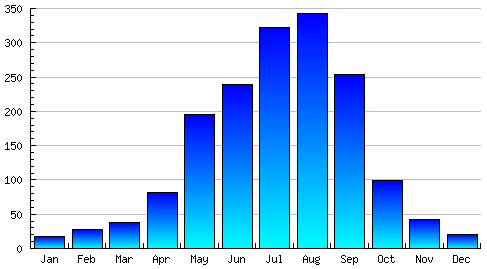
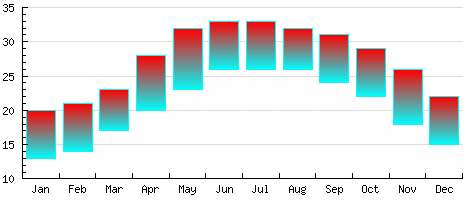
Hanoi has typical North Vietnam climate, with a cold and dry winter (when temperatures can drop to as low as 6°C – 7°C) and a hot and extremely humid summer (temperatures can climb up to a maximum of 35°C). Spring is characterized with light drizzles while the summers bring heavy rain. The best time to visit Hanoi is around September to November or from March to April for their milder temperatures and pleasant weather.
Average Rainfall millimeters
Average Temperature
Hue/ Danang
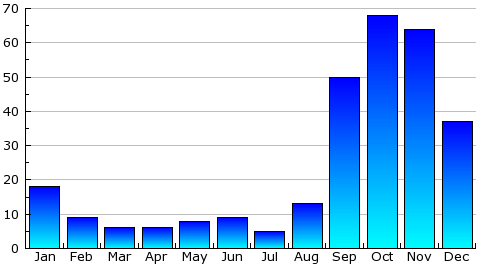
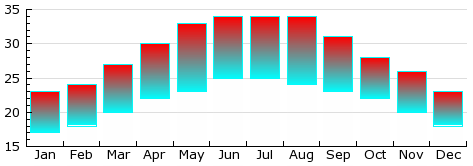
The coast and delta area of Hue has tropical climate and is divided into two distinguished seasons. The dry season (from March to August) has a maximum temperature of 400 C and the colder, rainy season (August to January) has temperatures that can go down to 19,70 C. In higher areas (on mountains, highlands) the temperature is generally cooler. From March to August will be the best time to visit Hue, especially between March and April when the temperature is more pleasant, though rainfalls are still likely. Hue sees fog and rain quite frequently, even when the weather across the Hai Van Pass in nearby Danang is sunny. During the rainy season, between September and January, rain is more frequent and can be heavy.
Weather chart for Hue/Danang/Hoi An area
Average Rainfall centimeters.
Average Temperature
Hoi An
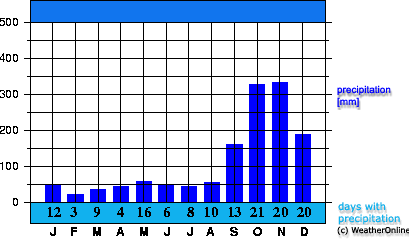
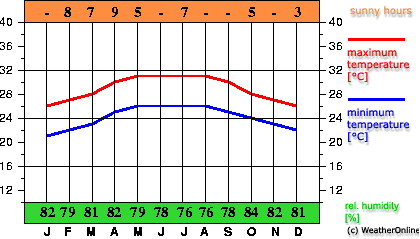
Somewhere between tropical and climate. The temperature is warm throughout the year (average 29°C), yet hotter around months June and July and cooler around December. Hoi An is affected by monsoon winds. The city will be constantly raining from September till January, and dry for the rest of the year. Overall, the best time to visit Hoi An is between May and June. February and April are among the best time to visit Hoi an when rainfall is low and temperatures are pleasant. The temperatures can get hot during summer time and during the rainy season, particularly during October and November, rains can be frequent and heavy.
Nha Trang
Nha Trang is extremely lucky to not be influenced by monsoon winds that turn the rest of southern Vietnam into water six months every year. Nha Trang has a warm, fair and beautiful climate nearly all year round, with the exception of late October, November and early December. The best time to visit Nha Trang would probably be March or April. The least windy months of the year are May, April and June. Nha Trang in general is not windy enough to windsurf, with the exception of Doc Let beach (35 km north of Nha Trang), which is usually reserved for experts.
Dalat
Surrounded by mountains and pine forests, Da Lat has many characteristics of a temperate climate. The average temperature here is 18–21°C, with highest temperature 30°C and lowest 5°C. Dalat also has the two season climate typical of South Vietnam, with a monsoon season from May to October and a dry season from November to April. Dalat is never stormy and only has occasional heavy winds from the ocean through the mountains East side of the city. Dalat is in the temperate region and has pleasant weather year-round, even sunny during much of the rainy season. The dry season lasting from November to March, and the rainy season from April to November. During the winter months, the average temperature is 10 C while during summer it is around 20 C. Ideal weather is from November to March, when the air is fresh and cool.
Mui Ne
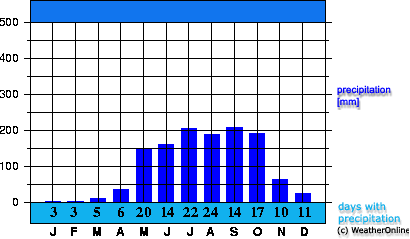
Mui Ne lies in the monsoon tropical zone, with 2 district seasons. The rainy season is from May to October and the dry season from November to April. Dry season normally means NO RAIN. Mui Ne lies in the emerging Binh Thuan Desert and is prone to drought. Onset of rainy season can bring flash flooding and extensive errosion. Rainy season brings lush green foliage and the return of birds, butterflies and other wildlife (and takes away the tourists). Rain is usually for an hour, once or twice a day (typically afternoon and evening), during the rainy season. The yearly average rainfall varies between 50 and 100 cm. The average relative humidity is 79%. Because Mui Ne receives very little rain, it is also sunnier, and thus feels hotter than Nha Trang or Ho Chi Minh City.
Ho Chi Minh City weather and climate
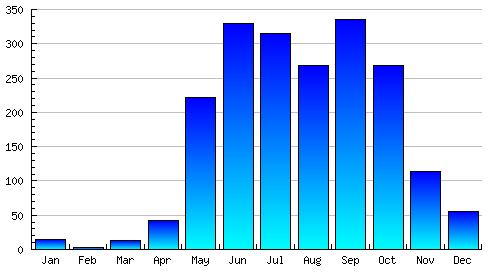
Located in South Vietnam, Ho Chi Minh City city has a tropical climate. The average humidity level is 75%, average temperature is 28 °C. The city is generally warm, and has a monsoon season from May to November and a dry season from December to April. During the rainy season starting from May to November, rains can be long and heavy, but often are short daily rains that clear quickly. Generally, the best time to visit is during the dry season from December and April, although the coolest months are October through December.
Average rainfall in Saigon
Average temperature in Saigon
Phu Quoc
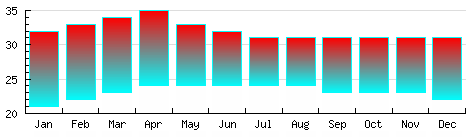
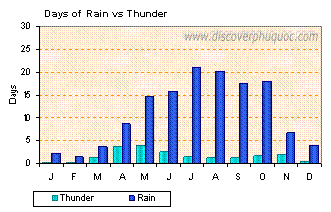
The island’s monsoonal sub-equatorial climate is characterized by distinct rainy (June to October) and dry seasons (November to May). The annual rainfall is high averaging 2,879 mm. In the northern mountains up to 4,000 mm have been recorded. April and May are the hottest months with temperature reaching 35 °C. Trips to Phu Quoc can be made all year round, but the best time is dry season when the sky is always sunny, clear and blue.
So there you have it!! I wish to thank all of the sites I copied from. It was a bit hard compiling this information into one place, and your sites helped immensely.
Update.
Here is another link to rainfall and temperature charts with more detailed information
Your site is so helpful! I am looking at visiting Hoi An sometime in August and am concerned about the weather – I live in Australia and even though I am used to 40+ heat I don’t like it! It is currently winter here and the highest temp is around 20 currently. I am not a fan of humidity especially as it makes me cranky haha. August is okay to visit Hoi An though, from the comments I have seen? Also I have read about the lunar festival, I would love to see that as the 14th is my birthday. I have so many questions I think I will be visiting your site often as I plan
Sorry for late response. I was overseas and never received a notification for this comment.
Yes it can be hot in Hoi an in August, but it is much easier to deal with than you might think. There are fans and aircons everywhere. A lot of the old town is shaded and often there are ocean breezes. You will be fine.